- Technical Documentation: Technical Design Report
- Build Download: Meta Quest / PCVR Build
Overview
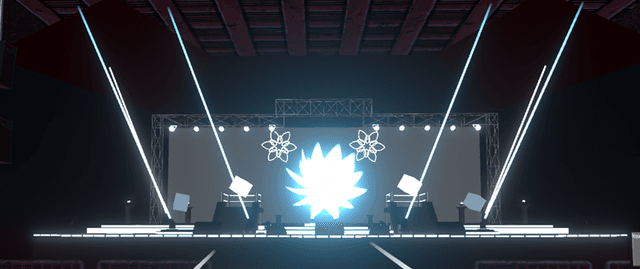
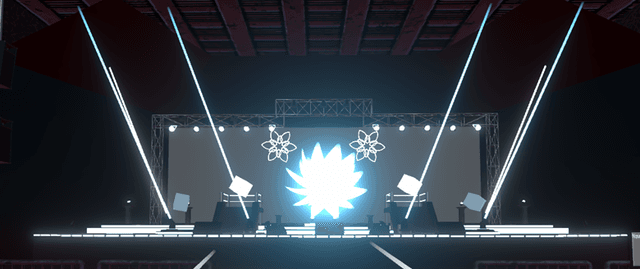
VR Concert is an interactive virtual reality music and light show experience developed in Unity with C# targeting the Meta Quest headset. Rather than relying on pre-baked lighting timelines, the concert stage analyzes audio waveforms in real time to drive dynamic stage lighting, material emissions, and reactive visual geometry around the player.
Tools & Technologies: Unity, C#, Meta Quest XR SDK, Real-Time Audio Spectrum Analysis, 3D Spatial Audio
Technical Contributions & Granular C# Systems
1. Real-Time Audio Spectrum Analyzer (FrequencyBandAnalyser.cs)
- Frequency Band Partitioning: Engineered
FrequencyBandAnalyser.csto sample real-time spectrum data from the active UnityAudioSourceevery frame and group raw FFT amplitudes into discrete frequency bands (bass, mids, and highs) for consumption by stage visualizers.
2. Centralized Stage & Material Controller (MusicController.cs)
- Reactive Lighting & Shader Synchronization: Programmed
MusicController.csto manage song state, track progression, and broadcast frequency-driven color and emission intensity updates across stage fixtures and environmental materials.
3. 3D Spatialized Concert Acoustics
- Positional Audio Falloff: Configured 3D spatialized audio sources positioned at the physical stage speaker arrays, applying distance attenuation curves so perceived loudness and directional stereo imaging respond naturally as the player walks closer to or further from the stage in VR.
Direct Impact
- Zero-Choreography Track Support: Driving stage lighting and shader emissions through real-time frequency band analysis allowed new songs to generate synchronized light shows automatically without manual keyframing.
- Comfortable Standalone VR Performance: Lightweight C# spectrum sampling and shared material property updates maintained smooth frame rates required for comfortable Meta Quest headset playback.